 279. Spring in the Valley of the Wind 中
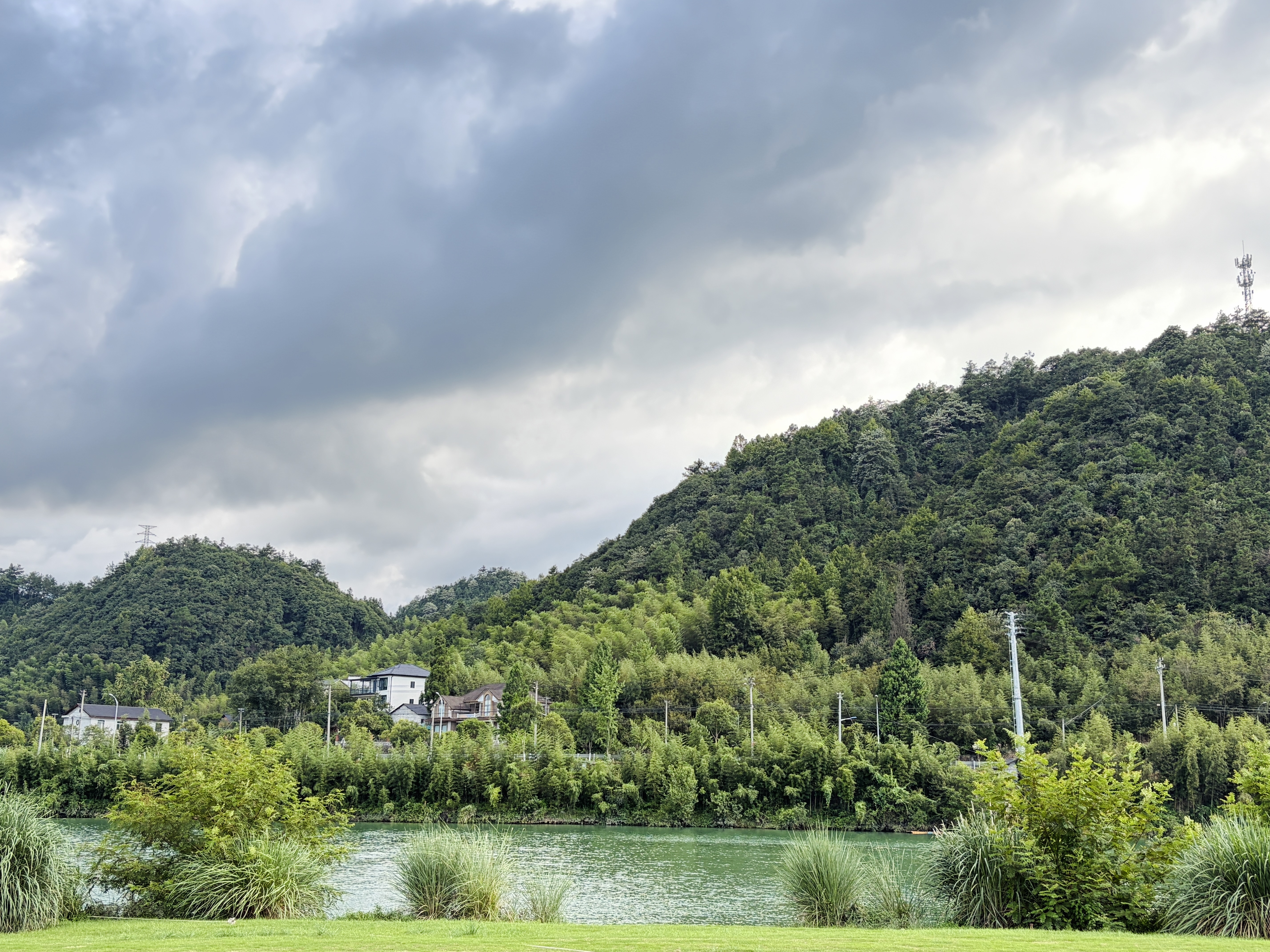
The cover photo was taken during a weekend trip to the Valley of the Wind in Lin’an, where I took my kid to play in the water. The place is wide open, though there are lots of children and adults on weekends. My kid liked it. From a distance, the water had an unusual blue-green look. I took the photo by a large lake outside.
Recording down-to-earth trending tech I see every week, filtered and published here. Follow this weekly newsletter to get update notifications
Trending Tools
Cumora: this excellent workspace for agent teams is now open source
https://github.com/yetone/cumora
It’s from yetone, another entry in my “didn’t expect that” series. I really didn’t expect it to be open-sourced. Among the open-source options available today, this is one of the better agent team collaboration tools I’ve seen. The clients are complete, and the way the code is built is worth studying too.
Omarchy: the beautiful, modern Linux system everyone is talking about
https://omarchy.org/
Omarchy is an omakase Linux distribution based on Arch. It uses the Hyprland tiling window manager and the Quickshell desktop construction kit, and comes with plenty of the tools needed for productive work in the AI era. Reviews have been very positive. If you have a spare machine, give it a try.

MicroLighter: a tiny syntax highlighting library
https://davatron5000.github.io/microlighter/
It’s only 2.05 KB after gzip, and it looks simple to use. I asked my agent whether it could replace Weekly’s syntax highlighting library and got turned down, haha. If you’re working on a new project, though, give it a try.

iGhostty: a terminal for jailbroken iPhones
https://github.com/OwnGoalStudio/iGhostty
I saw this on Kankan’s X feed, and it looks pretty good. If your iPhone is jailbroken and you want to use a terminal on your phone, take a look.

Just Looking Around
The Claude Code guide for startups
https://claude.com/blog/claude-code-guide-for-startups?ref=aiposthub.com
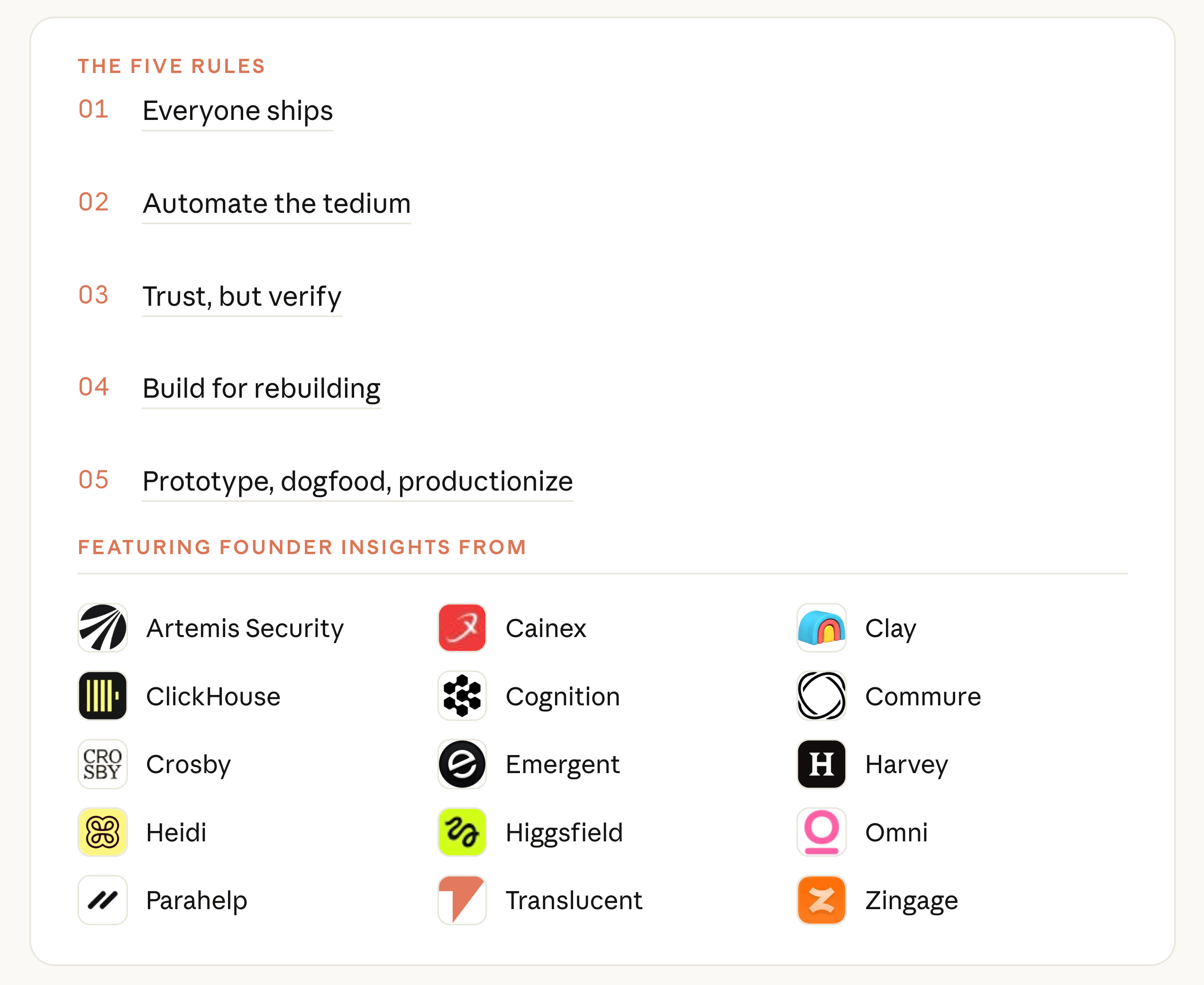
This official Anthropic guide looks at how 15 fast-growing startups use agentic coding to ship like organizations ten times their size. Worth a look.
Omarchy: an AI-friendly Linux system that works out of the box
https://xiangyangqiaomu.feishu.cn/docx/ZH7td7nKVoC5Y0x3UAAcEG3TnPd
Building on Omarchy, the AI-friendly Linux system mentioned above, Qiaomu wrote a tutorial with AI. Take a look if you’re interested.
“One Short of Three,” and this time I’m in
https://www.lizhinb.com/jlpgl/
I missed the first two, but I’m not missing this one. Excited, happy, let’s go!

|

|
A few words on how I name my products
I suddenly wanted to talk about how I name my products. The process is quite interesting, and perhaps you can also draw on your own personality and tastes to find a good name for your product.
Before AI arrived, there weren’t nearly as many coding projects around. I’ve always cared a lot about whether a product feels alive and has a presence of its own, so I take naming very seriously. It’s a little like the birth of a child. Parents spend a lot of time choosing a name that will stay with their child for life, one they will love and might even draw a lifetime of encouragement and confidence from.
Even now, with AI coding projects everywhere, I still strongly recommend giving your product a good name if you want to put it in front of a wider audience instead of keeping it as something you play with by yourself. Every time you introduce it, you’ll feel more confident in it and more attached to it, and you’ll want to keep spending time and energy making it better.
My first product was MiaoYan, which I built around 2020. Markdown note-taking apps were very popular then, but none of them felt quite right to me, so I learned Swift and made one myself. I have always loved Chinese characters. I wasn’t thinking about internationalization at the time and mostly built it for myself, to keep notes from work and study. I’ve always believed that good writing has a life of its own, which led me to the phrase “miao bu ke yan,” meaning “wonderful beyond words.” It captured exactly what I wanted to express when writing. I still love the name, and I continue to work on the product. It rolls off the tongue and is simple and easy to remember. What I’m getting at is that a product name should connect to what the product does or the meaning it wants to carry. An unrelated name may sound nice, but it will be hard to explain.
My second product was Pake, a tool written in Rust that turns a website into a lightweight desktop app with a single command. Why did I start using English names this time? I later discovered that many people overseas were using MiaoYan too, and introducing it with the Pinyin name felt strange. From then on, I tried to choose names that people everywhere could understand at least a little. When naming Pake, I started with the Chinese word for packaging, which becomes “pack” in English. Pack is a good word, but it felt too common. Looking back, the idea feels a lot like Vue. As I remember it, Vue was first going to be called View, but Evan You thought that was too direct, tried it in Google Translate, and found the French word Vue. I did the same with Pake, looking up translations of “pack” in different languages, until I found that “pack” is “pake” in Haitian Creole. I was thrilled and chose it immediately. The name is easy to spell, remember, and type. Anyone who has used it should have no trouble remembering it, and Pake’s command is also pake, which makes both using and sharing the product very simple.
The third product is the more familiar Mole. At the time, it was still a command-line tool that dug deep into the junk on your Mac. This time I started with the Chinese name. I always pictured the product as a little creature that was active but quiet, diligently cleaning up junk. I kept thinking about what animal would fit that feeling, but couldn’t find one I liked. Then I think I saw a mole in a children’s book and immediately thought, yes, that’s exactly it: quiet, small, and constantly digging. Even better, the English name Mole fits the naming style I’ve always liked. It’s easy to remember, write, and say, but it isn’t generic. Looking back, the whole process is still very interesting and fun.
The next three products accidentally became a series: Kaku, Waza, and Kami. I would say that without the name Kaku, the other two names would never have followed. Kaku is a lightweight, simple, out-of-the-box, AI-friendly terminal that I wrote during last year’s Spring Festival holiday. The only thing I knew when naming it was that it needed to feel light and satisfying. I started saying random sounds out loud, and eventually found that “kaku, kaku, kaku” felt especially good to say. I searched for that sound and discovered that kaku is the Japanese verb 書く, meaning “to write.” That was fascinating. Terminals and writing are closely connected, and the name felt poetic. Kaku is also a character in One Piece, so I chose it right away. Waza came next, the Japanese word 技, meaning “skill,” which fits the engineering Skills I make. Kami is 紙, meaning “paper,” and became the name of my layout Skills built around the idea that good content deserves a good page. A sheet of paper is clean and can hold so many valuable things.
This isn’t to say that a name is crucial to a product. When Anthropic first appeared, I hated the name because I could never remember how to spell it, but that didn’t stop its products and models from succeeding. There is no necessary connection. Even if your product is called Er Gou, or “Second Dog,” being genuinely excellent won’t stop it from succeeding. Still, some names do have an effect. Another ugly one is Antigravity, which is even harder to pronounce and spell than Anthropic. From the moment it launched, I had a feeling the product would struggle. Its underlying model wasn’t among the top one or two, so it had to compete more on product capability, and the product itself wasn’t especially strong either. That is how it ended up where it is today. A name isn’t good just because it’s short and looks simple, either. Take Trae. Even now, I often type it as “trea” or forget how to spell it. A short name with simple letters isn’t automatically a good one when it is hard to remember, hard to spell, and doesn’t seem to mean anything. If nobody tells you it stands for “The Real AI Engineer,” you might never know. That makes it harder to break into the mass market.
I ended up rambling much longer than expected. What I’m trying to say is that a product should have a tone and personality of its own instead of looking like everything else. Of course, my naming method fits me and my personality. Your product should reflect your personality and interests too. If you like Japanese anime, you can draw from its characters. If you love ancient Chinese mythology, you can search there for names that are rare but interesting. One last thought: I think a name should roll off the tongue, be easy to say, remember, and write, stay short, and even feel effortless to type on a keyboard.